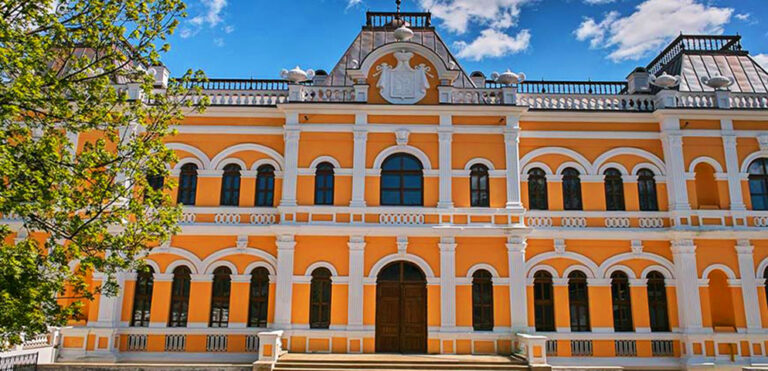
Hidden in the town of Hîncești, in the southern part of the Republic of Moldova, stands one of the country's most captivating historical landmarks: the Manuc Bey Complex.With its elegant architecture, aristocratic atmosphere and centuries-old stories, the estate opens a window onto a Moldova that existed long before modern borders, highways and tourist routes. It's …
Manuc Bey Mansion: The Story Behind One of Moldova’s Most Fascinating Estates
Hidden in the town of Hîncești, in the southern part of the Republic of Moldova, stands one of the country’s most captivating historical landmarks: the Manuc Bey Complex.
With its elegant architecture, aristocratic atmosphere and centuries-old stories, the estate opens a window onto a Moldova that existed long before modern borders, highways and tourist routes. It’s a place where Armenian heritage, Moldovan history, European architecture and the ambitions of a wealthy family all converge in one remarkable complex, and, if we’re being honest, they pull it off better than most renovation projects manage today.
Today, the mansion is one of the most interesting cultural attractions in Hîncești. But its story doesn’t begin with the buildings that now carry its name, it begins with a man whose life was far shorter, and far more eventful, than we might expect.
Who Was Manuc Bey?
Manuc Bey, also known as Manuc-Emanuel Mârzaian, was an Armenian merchant and diplomat, and one of the most influential figures of his time in the region.
And here’s the part many visitors only discover after they’ve arrived: Manuc Bey barely got around to building anything we see today. He bought the estate from Ioniță Iamandi in April 1816, for 300,000 lei, and by the summer of 1817 he was dead, at just 48 years old, a single year after the purchase. He basically had time to sign the paperwork, not to lay a single brick.
Every building within the complex’s current perimeter, except for the Iamandi House, which came with the land, was built by his descendants. So the name on the gate belongs to Manuc Bey, but the architecture is entirely the work of the family that came after him.
A Palace Built by the Next Generation
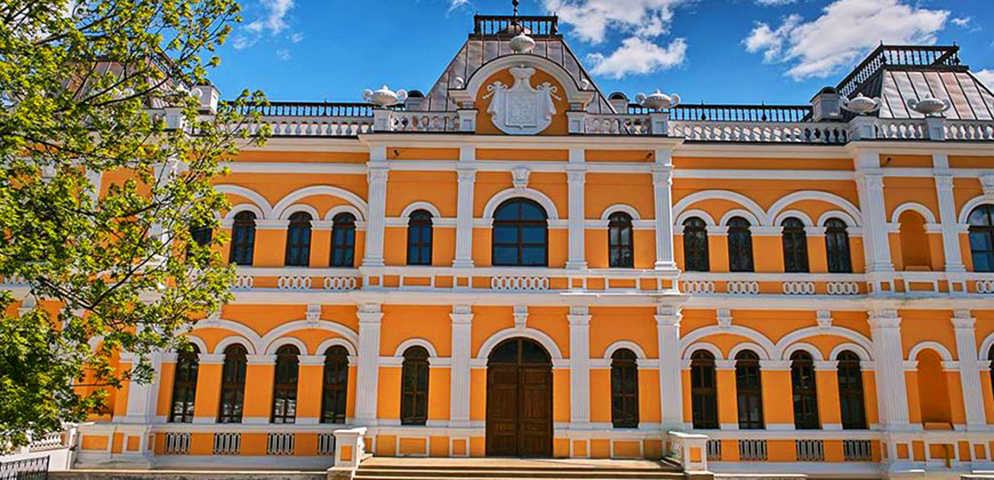
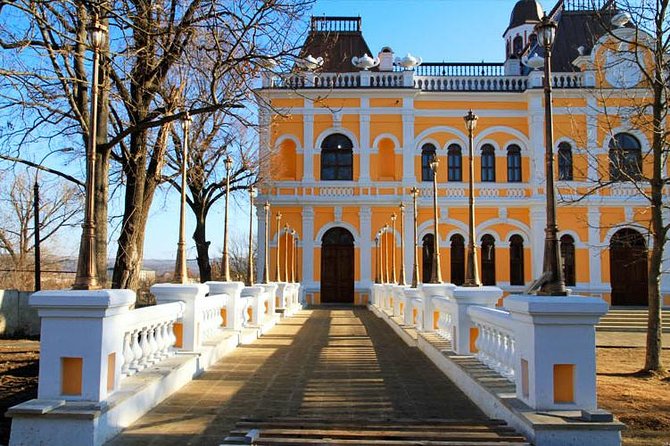
The most important stage in the estate’s development took place in the second half of the 19th century. Construction of the Princely Palace began around 1857 and finished in 1861, based on a design by architect Alexandru Bernardazzi, one of the most important architects active in Bessarabia at the time. The effort was largely driven by Manuc Bey’s son, Murat Manuc Bey, while the interiors were later completed by his grandson, Grigore.
The result is a sophisticated residence shaped by European influences. Moldova’s national tourism authority describes the complex as built in the French Neoclassical style, a surprising level of grandeur for a town nowhere near the capital.
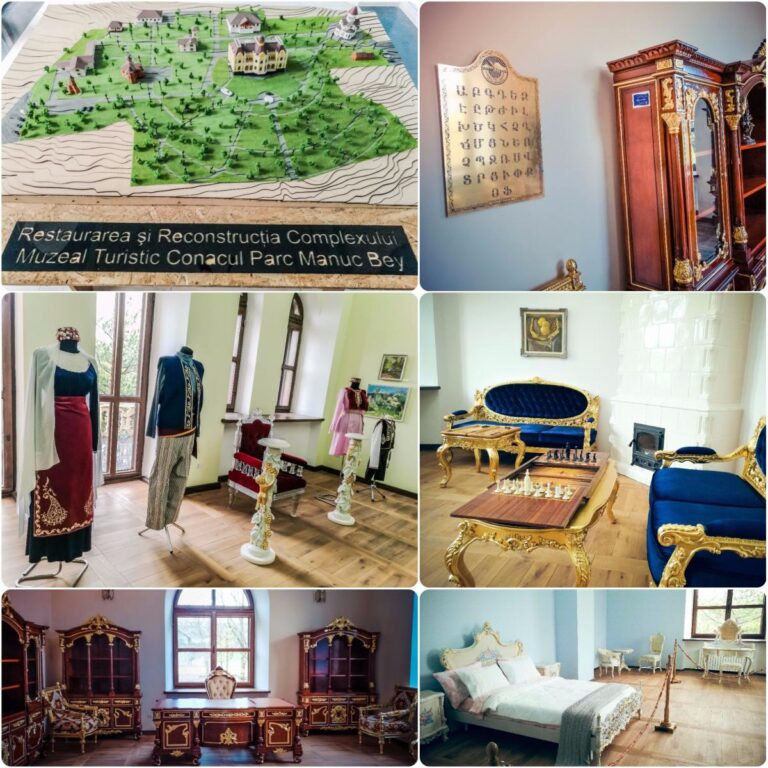
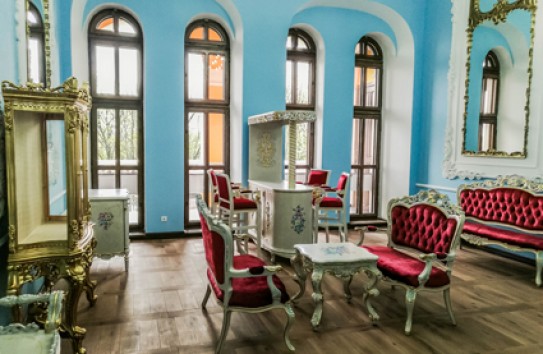
The palace’s interior is believed to have been decorated in four different styles, Armenian, Turkish, Moldovan and European, a combination that says a lot about the family’s blended identity, and perhaps a little about their inability to commit to just one decorating scheme. There’s even a legend that some of the ceilings were painted by Ivan Aivazovsky, the celebrated Armenian marine painter. There’s no definitive proof, but the story persists, and honestly, it adds a nice bit of flair to a building that was never exactly short on stories.
The complex eventually grew beyond the main palace to include the Princely Palace, the Hunting Castle, the Watchtower, the steward’s house, an orangery and stables. A park and garden rounded out the ensemble, designed not just for residence but for hunting, leisure and social life.
The Architecture of Manuc Bey Mansion
The first impression Manuc Bey Mansion leaves is one of scale and architectural character. The main palace combines symmetry and decorative elegance with the restrained lines of European Neoclassicism. Rather than resembling a traditional Moldovan manor house, the estate reflects the international outlook of its owners and the cultural influences moving through the region during the 19th century.
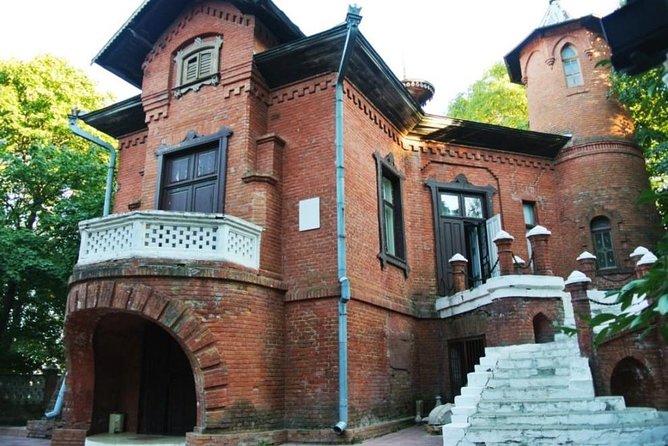
One of the most interesting buildings in the complex is the Hunting Castle, also associated with Alexandru Bernardazzi. The estate also features a Watchtower, which adds a distinctive vertical element and reinforces the complex’s almost castle-like atmosphere, though “castle” is a word the locals use with considerable generosity.
More Than a Mansion
Calling Manuc Bey simply a “mansion” doesn’t really capture what awaits visitors in Hîncești. It’s more accurate to call it a historical and architectural complex. The estate developed over several decades and included buildings serving very different purposes, some tied to administration and household life, others designed for recreation and representation. Historical sources credit Grigore Manuc Bey with the construction or development of the steward’s house, the Watchtower, the orangery and the stables. The Armenian church tied to the estate was also rebuilt in stone during the 19th century.
And the story has a subterranean layer, quite literally. The tunnels and underground galleries beneath the complex were well known in Hîncești, they connected the various buildings and served as escape routes in case of danger. Most were demolished over time, but the tunnel between the Princely Palace and the Iamandi House has since been restored. From the Iamandi House, underground passages once allowed the Mârzaian family to flee in case of danger, passages said to connect with the town’s catacombs, which, apparently, are extensive. Fair enough: if you’re going to build a palace, you might as well have an escape route ready to go.
From Aristocratic Estate to Forgotten Heritage
Like many historic buildings across Eastern Europe, the Manuc Bey Complex went through dramatic changes during the 20th century, and not the gentle kind.
In 1940, the entire estate and castle were converted into a military barracks for a Soviet army unit. When the troops eventually withdrew, they blew up the Armenian Church and set fire to the Princely Palace, their parting gesture of gratitude for the accommodations, apparently, was arson. Not exactly the elegant send-off a Neoclassical palace deserves.
Afterward, the Hunting Castle served as an office for the Soviet forestry administration, while the club in front of it hosted dances and weddingsM an odd career pivot for a former aristocratic hunting lodge. The town itself changed identity too, known as Kotovsk for several decades before reclaiming its historical name, Hîncești, in 1990.
In 1954, the Princely Palace underwent major repairs under the design of Robert Kurtz, Chișinău’s chief architect at the time. From 1965 onward, the building housed the Construction College, a fairly ironic assignment for a palace that had, at one point, badly needed reconstruction of its own.
The Restoration of Manuc Bey Mansion
Restoring the complex became a major cultural and tourism project for the region.
Large-scale renovation work began in 2014 and lasted nearly two years, backed by public and international funding. European support also helped fold the mansion into a wider tourist route linking cultural sites across Moldova, Romania and Ukraine.
The restored Princely Palace was officially inaugurated in 2017 — a defining moment in the complex’s revival. The reconstruction also turned up some genuine surprises: in the palace basement, workers uncovered the former Turkish bath chambers, while renovation of the steward’s house revealed a wooden beam that once supported the roof, engraved with the year 1859 — likely marking when construction was completed. Numerous period architectural elements and objects surfaced during the works as well, now on display for visitors.
Restoration has continued beyond the main palace. In recent years, projects have also focused on the access staircase and the Hunting Castle — proof that preserving the Manuc Bey Complex remains very much an ongoing process, not a finished chapter.
Why Manuc Bey Mansion Is Worth Visiting
For travelers exploring Moldova, Hîncești is often overlooked in favor of better-known destinations like Chișinău, Orheiul Vechi or the country’s famous underground wineries.
That’s exactly what makes Manuc Bey Mansion worth the detour.
A visit here offers a different side of Moldova. Instead of vineyards and rural landscapes, we get aristocratic architecture. Instead of a traditional village house, we find a European-style palace. Instead of a single historic building, we discover an entire complex shaped by generations of one influential family.
And perhaps most importantly, the estate shows just how connected Moldova has always been to the wider world. Armenian merchants, European architects, local aristocracy and regional politics all intersect in the story of Manuc Bey.
A Place Where Different Histories Meet
The story of Manuc Bey Mansion can’t be separated from the region’s multicultural history.
Manuc Bey’s Armenian origins are a defining part of the estate’s identity, while its architecture reflects European influences, and the property itself developed within the historical landscape of Bessarabia. That combination makes the mansion especially compelling for travelers drawn to the cultural crossroads that shaped Moldova.
Walking through the estate, it’s easy to forget we’re in a relatively small town in southern Moldova. The architecture feels like it belongs to a different world entirely — one of diplomats, merchants, aristocrats, grand residences and long journeys across Eastern Europe.
The Museum Inside the Hunting Castle
The Hunting Castle now displays numerous artifacts collected by the History and Ethnography Museum — pieces from ancient periods uncovered during excavations across the Hîncești district, alongside objects from more recent centuries tied to the culture and domestic traditions of the area’s inhabitants. It’s the kind of museum where every display case seems to have a stranger backstory than the last.
Manuc Bey Mansion Today
Today, the complex is open to visitors and functions as a cultural and tourist destination. It hosts guided tours, exhibitions and cultural events, turning the historic buildings into part of contemporary life rather than leaving them as simply preserved monuments.
The complex’s continued development also reflects a broader push to make Moldova’s lesser-known heritage accessible to international travelers. In 2025, the Moldovan government highlighted ongoing initiatives to modernize the complex and organize cultural events, fairs and activities involving local craftsmen and producers.
That makes Manuc Bey more than a monument to the past. It’s becoming a place where history, tourism and local culture meet.
The Hidden Gem of Hîncești
Some places in Moldova grab attention immediately through spectacular landscapes. Manuc Bey Mansion is different.
Its appeal lies in the layers of history tucked behind its walls. It’s the story of an Armenian diplomat whose name stuck to a Moldovan estate. It’s the story of a family that kept building long after his death. It’s the story of European architectural influences arriving in 19th-century Bessarabia. And it’s just as much the story of a historic complex that survived decades of political and social upheaval — including a retreating army with an unusual enthusiasm for arson.
And maybe that’s exactly what makes the estate so fascinating. Manuc Bey Mansion isn’t just a beautiful building. It’s a fragment of Moldova’s complicated, multicultural past, preserved in stone.
Planning Your Visit
Manuc Bey Mansion is located in Hîncești, roughly 35–40 kilometers southwest of Chișinău — ideal for a day trip from the capital.
The complex sits at 51 Mitropolit Varlaam Street, Hîncești District. The national tourism authority lists it as an active tourist attraction offering guided visits and cultural activities.
The mansion pairs well with other attractions across central and southern Moldova, making for a fuller itinerary for travelers interested in history, architecture, wine and local culture.
Discover a Different Side of Moldova
Moldova is often introduced to travelers through its wine. But beyond the vineyards lies another country entirely — one of old estates, monasteries, fortresses, forgotten stories and multicultural heritage.
Manuc Bey Mansion is one of the places where that hidden Moldova comes into view. If we’re making our way through the country and want to step off the usual tourist routes, Hîncești deserves a spot on the itinerary.
Come for the architecture. Stay for the story. And leave with a deeper understanding of the many cultures and historical influences that shaped Moldova.
Explore Moldova with Guide Moldova
Want to discover more of Moldova beyond the places listed in the usual travel guides?
Explore our curated tours and experiences and discover medieval fortresses, monasteries, traditional villages and Moldova’s famous wine culture with local guides.
Your Moldova story can start here.

GuideMoldova.com
Keep in touch with our news & offers
Subscribe to Our Newsletter
Thank you for subscribing to the newsletter.
Oops. Something went wrong. Please try again later.