Long before Moldova had its medieval fortresses, monasteries or famous wine cellars, communities living on this land were creating extraordinary works of art, building sophisticated settlements and developing traditions that continue to intrigue archaeologists thousands of years later.Their story is now at the centre of a new exhibition at the National Museum of History of …
Before Moldova: Discover the 7,000-Year-Old Cucuteni–Trypillia Civilization in Chișinău
Long before Moldova had its medieval fortresses, monasteries or famous wine cellars, communities living on this land were creating extraordinary works of art, building sophisticated settlements and developing traditions that continue to intrigue archaeologists thousands of years later.
Their story is now at the centre of a new exhibition at the National Museum of History of Moldova in Chișinău.
Opened on September 24, 2026, the exhibition, Vestiges of the Cucuteni–Trypillia Culture in the Republic of Moldova, brings together archaeological discoveries from prehistoric settlements across the country. Some of the objects are being presented to the public for the first time, offering a rare opportunity to explore a civilization that flourished in this part of Europe thousands of years before the rise of many of its better-known ancient cultures.
A civilization that flourished thousands of years ago
The Cucuteni–Trypillia civilization developed between approximately the fifth and third millennia BC, across territories that today belong to Moldova, Romania and Ukraine. Its communities left behind evidence of an unexpectedly complex prehistoric society. They cultivated the land, raised animals, constructed settlements and produced some of the most distinctive pottery of prehistoric Europe.
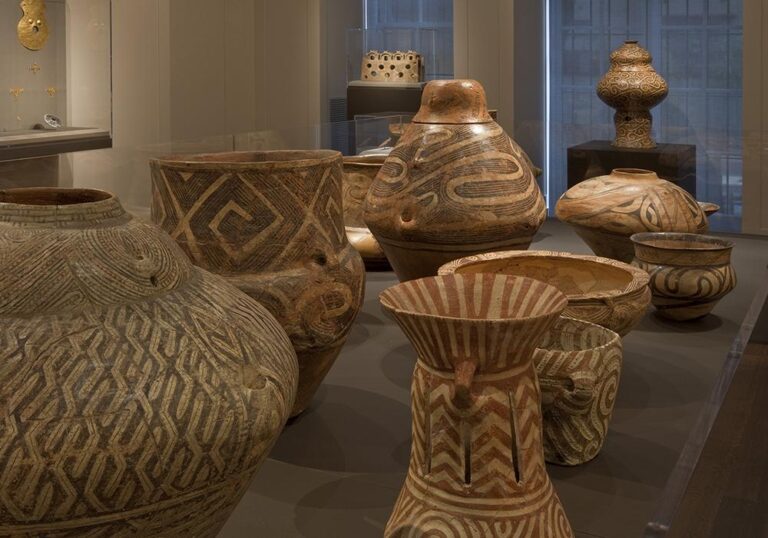
What makes Cucuteni–Trypillia particularly fascinating is its artistic legacy. Its ceramics, decorated with elaborate spirals, geometric compositions and contrasting colours, reveal a remarkable sense of design. Thousands of years later, these objects remain immediately recognizable. The civilization is also known for its exceptionally large settlements, particularly in present-day Ukraine, where archaeological research has revealed communities extending across hundreds of hectares.
Yet much about the people who lived in these settlements remains uncertain. Their language is unknown, and the precise meanings of many of their artistic and ritual objects continue to be debated. This is part of what makes their surviving artefacts so valuable. They offer glimpses into a world that existed long before written records could tell its story.
Prehistoric treasures on display in Chișinău
The new exhibition at the National Museum of History of Moldova brings together discoveries that illustrate different aspects of everyday life in Cucuteni–Trypillia communities.
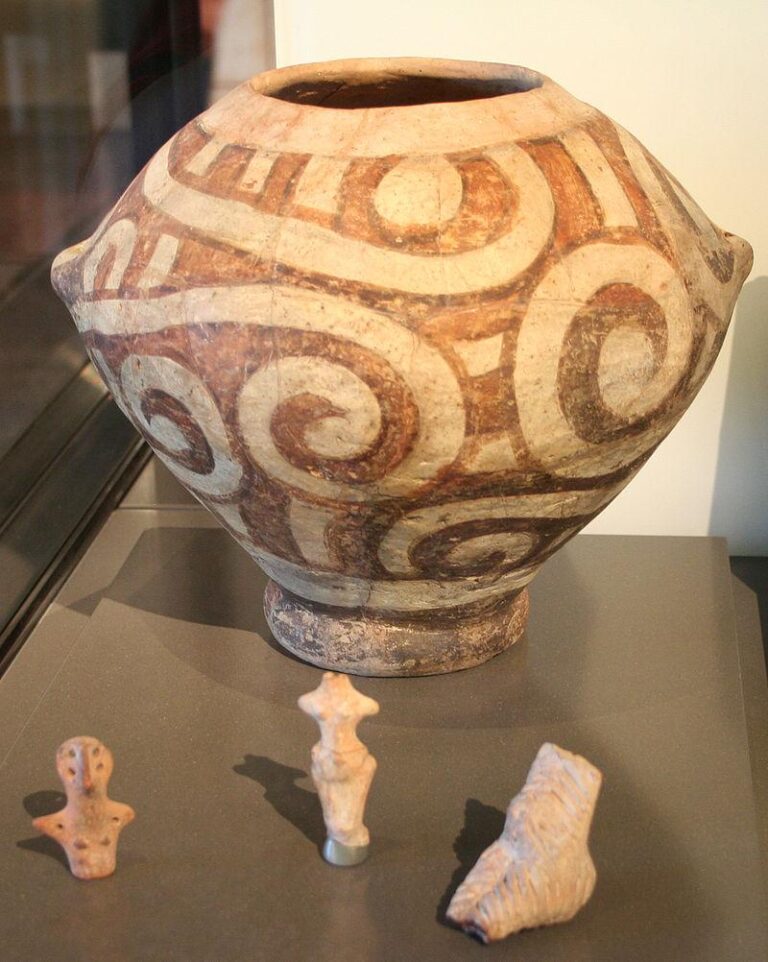
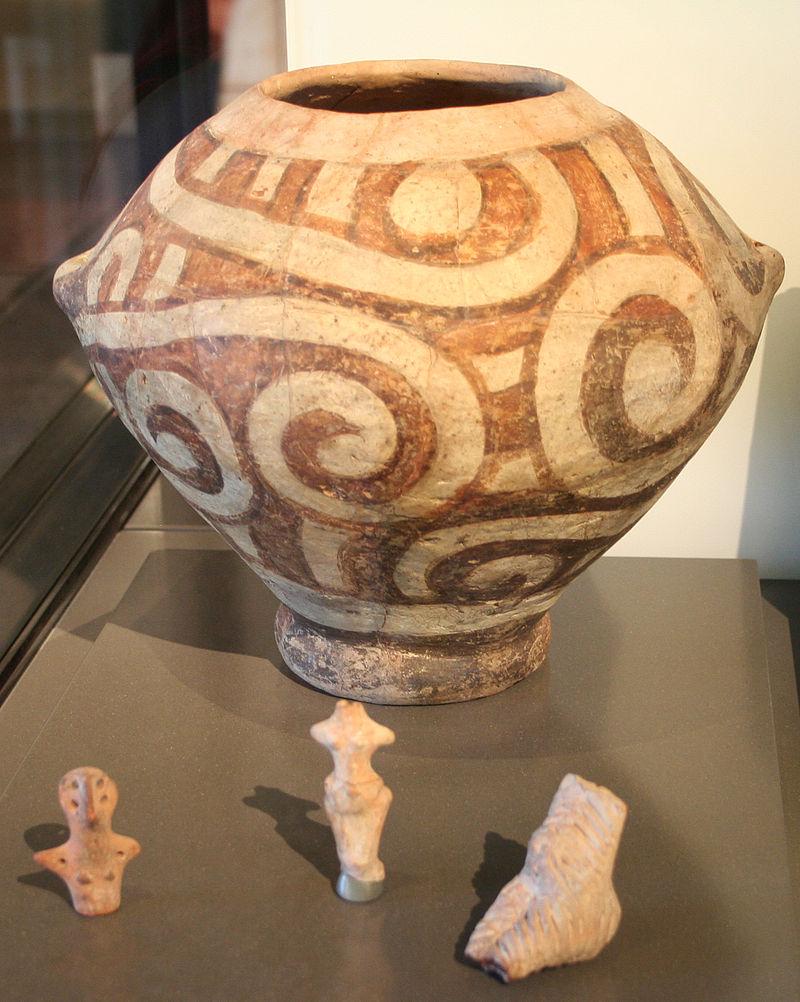
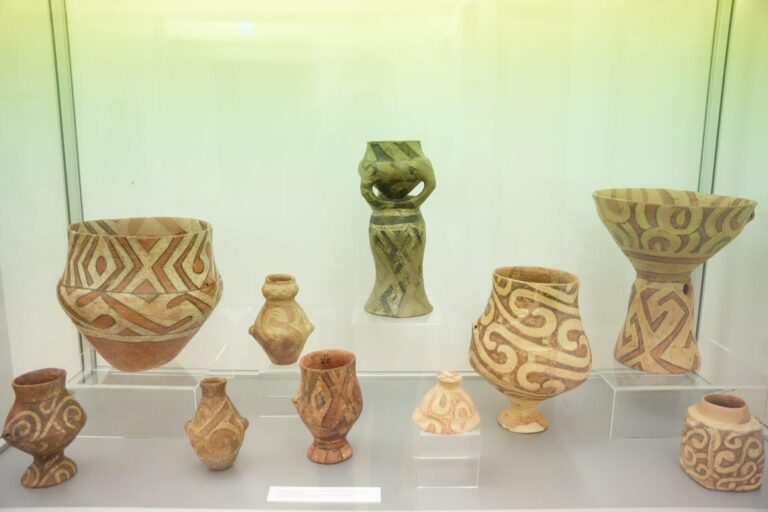
Visitors can explore beautifully decorated pottery, anthropomorphic and zoomorphic figurines, tools made from flint, bone and antler, copper objects and fragments of prehistoric dwellings. Several artefacts have never previously been displayed to the general public.
Among the most striking objects are the painted ceramic vessels. Their intricate patterns and carefully balanced compositions demonstrate that pottery was much more than a practical craft.
The figurines offer another perspective on prehistoric life. Representations of humans and animals provide important evidence for archaeologists studying the beliefs and symbolic traditions of these ancient communities, although their exact purposes are not always known.
Tools and architectural fragments, meanwhile, reveal a more practical side of the civilization. They help reconstruct the activities of people who farmed, built houses, prepared food and worked with materials available in their environment.
Together, these discoveries make it possible to imagine the daily life of communities that inhabited the territory of present-day Moldova more than five thousand years ago.

Why this exhibition matters for Moldova
The exhibition is part of the European Heritage Days 2026, an initiative celebrating the cultural heritage shared by communities across Europe.
It also draws attention to the international significance of Cucuteni–Trypillia heritage. Efforts are underway to develop a transnational cultural route dedicated to the civilization and to advance the recognition of its archaeological heritage within the UNESCO World Heritage framework.
For Moldova, these initiatives offer an opportunity to connect its archaeological sites with a wider European cultural story.
The exhibition reminds visitors that the country’s history did not begin with its medieval rulers or the establishment of its modern borders. Its territory was home to communities whose artistic achievements and settlements form an important chapter in European prehistory.
Check the museum’s website for current visiting hours, admission details and the exact closing date.
The exhibition is an opportunity for international visitors to discover a chapter of Moldova’s history that is rarely included in conventional travel itineraries. It can also be combined with a wider exploration of Chișinău’s museums, architecture and cultural attractions.
Whether you are interested in archaeology, ancient art or simply curious about the people who inhabited this region thousands of years ago, the Cucuteni–Trypillia exhibition offers a different perspective on Moldova and its place in European history.
For Guide Moldova, it is another reminder that some of the country’s most remarkable stories are still waiting to be discovered.
Source and further information
National Museum of History of Moldova: https://www.nationalmuseum.md/ro/exhibitions/
Exhibition announcement supplied by the museum: opening September 24, 2026, Hall 2; on display until September 2027.

GuideMoldova.com
Keep in touch with our news & offers
Subscribe to Our Newsletter
Thank you for subscribing to the newsletter.
Oops. Something went wrong. Please try again later.