What a guided Transnistria tour actually looks like in 2026 — what to see, how it works, and what to know before you go.Transnistria is the kind of place that shows up on almost every "strangest destinations in Europe" list — a narrow strip of land along the Dniester river that's run its own government, …
Guided Transnistria Tours: Is It Safe and Worth Visiting in 2026?
What a guided Transnistria tour actually looks like in 2026 — what to see, how it works, and what to know before you go.
Transnistria is the kind of place that shows up on almost every “strangest destinations in Europe” list — a narrow strip of land along the Dniester river that’s run its own government, army, currency and border checkpoints since the early 1990s, without being recognized as a country by anyone. Most visitors reach it on a day tour from Chișinău, about an hour away, and it remains one of the most unusual, well-preserved slices of Soviet-era Europe still standing.
Is it safe?
Day to day, yes, most travelers describe Transnistria as calm and low-crime, and the vast majority of guided visits pass without any issue. That said, several Western governments (including the UK, Canada and Australia) advise against non-essential travel to the region, largely because of its unresolved political status and the wider regional context, and consular support there is limited if something does go wrong. It’s a good idea to check your government’s current travel advisory the week you go, rather than relying on anything written in advance — but for the vast majority of visitors on an organized day tour, this remains a straightforward and genuinely interesting trip.
What a guided tour actually looks like
Most visitors do this as a day trip from Chișinău rather than independently, which makes sense given the unfamiliar border procedure — guides handle the paperwork so you’re not doing it cold. A typical tour runs 6–8 hours and covers a mix of the following:
Tiraspol: the capital time forgot
Transnistria’s de facto capital is built almost entirely around Soviet-era landmarks that were torn down or repurposed everywhere else in Europe after 1991. Highlights include:
- The Lenin statue outside the parliament (Supreme Soviet) building, one of the largest still standing anywhere
- The T-34 tank memorial, commemorating World War II
- Suvorov Square, the city’s central hub, ringed by Soviet-era administrative buildings
- October 25th Street, the main avenue, good for simply walking and taking in the atmosphere
- The KVINT distillery, Transnistria’s well-known producer of cognac and brandy, which some tours pair with a tasting
Bender (Tighina) Fortress
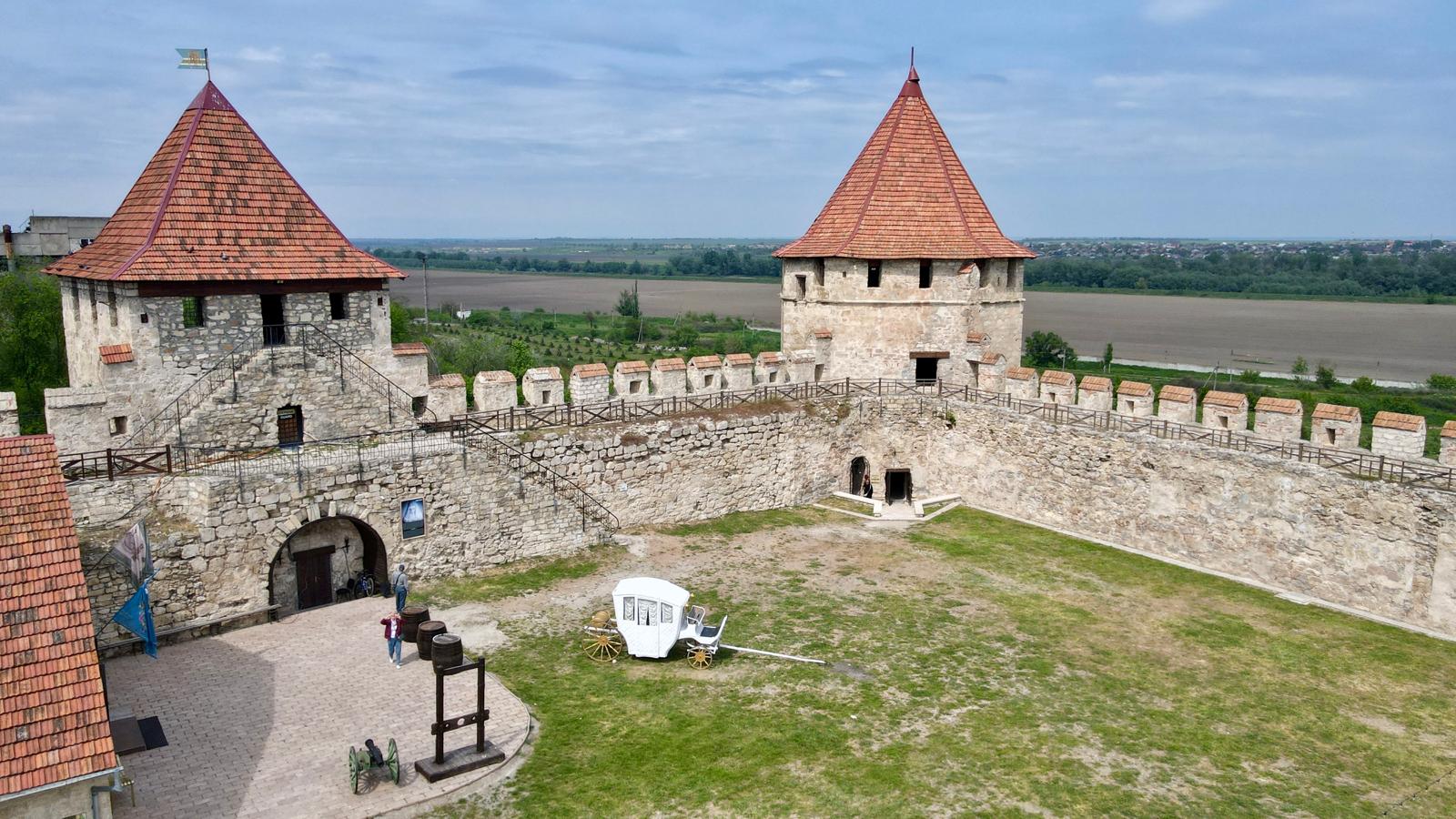
An Ottoman-built fortress on the banks of the Dniester, dating to the early 16th century — genuinely older and more substantial than most people expect, and one of the region’s most significant historical sites regardless of its more recent political history.
A Soviet-style lunch
Several tours build in a stop at a themed canteen-style restaurant — something like “Back to the USSR” — serving traditional local dishes in a deliberately nostalgic setting. It’s touristy, but it’s also genuinely good, inexpensive food.
Other stops some itineraries include
- The sturgeon farm outside Tiraspol, one of the largest in Europe, producing caviar that ends up on tables far from Moldova
- The Christmas Cathedral in Tiraspol, one of the region’s main Orthodox churches
- Smaller Soviet monuments and murals scattered through both cities, which most guides are happy to detour for if you’re interested
The practical stuff worth knowing before you go
- No visa required. At the checkpoint you’ll show your passport and receive a migration card stating how long you’re permitted to stay — typically enough for a day trip. Keep it; you’ll need to show it again on exit.
- Cards don’t work. International Visa and Mastercard aren’t accepted anywhere in the region, and there are no international ATMs. Bring cash — Moldovan lei, euros or US dollars — and exchange it locally into Transnistrian rubles, which can’t be spent or exchanged once you leave.
- Foreign SIM cards generally don’t work. Wifi is available in most hotels and cafés.
- Be discreet with a camera around checkpoints and anything that looks military — this is one of the few genuinely firm rules.
- Locals generally prefer the term “Pridnestrovie” to “Transnistria” — a small courtesy that goes a long way with guides.
Is it worth visiting?
If you’re interested in Cold War history, unrecognized states, or Soviet urban design that’s largely vanished elsewhere, yes — it’s a genuinely unusual place, and a guided day trip is the easiest way to see it without navigating the logistics yourself.
If it’s your first time in Moldova and you’re short on time, it’s reasonable to prioritize Chișinău, the wine regions and Orheiul Vechi first, and treat Transnistria as a worthwhile add-on rather than the centerpiece of the trip. For most travelers, a single guided day trip is exactly the right amount of Transnistria — enough to see the highlights and come away with a genuinely different set of photos than the rest of the Moldova trip, without needing to plan around it.
📖 Want the full list of what to see? Our digital guide covers Transnistria in more depth — every stop worth adding to an itinerary, not just the highlights above. Get the digital guide here. And if you’d rather have someone else handle the logistics, our colleagues at VoyageMoldavie can set up a guided tour for you.

GuideMoldova.com
Keep in touch with our news & offers
Subscribe to Our Newsletter
Thank you for subscribing to the newsletter.
Oops. Something went wrong. Please try again later.