Moldovan traditional music is not only carried through songs and dances, but through instruments that have shaped village celebrations, folk ensembles and regional identity for generations. Some are shared across the wider Balkans and Eastern Europe, while others have a special place in Moldova’s musical culture.Among the best known are the cobza (KOB-zah), the nai …
What Are Moldova’s Traditional Musical Instruments?
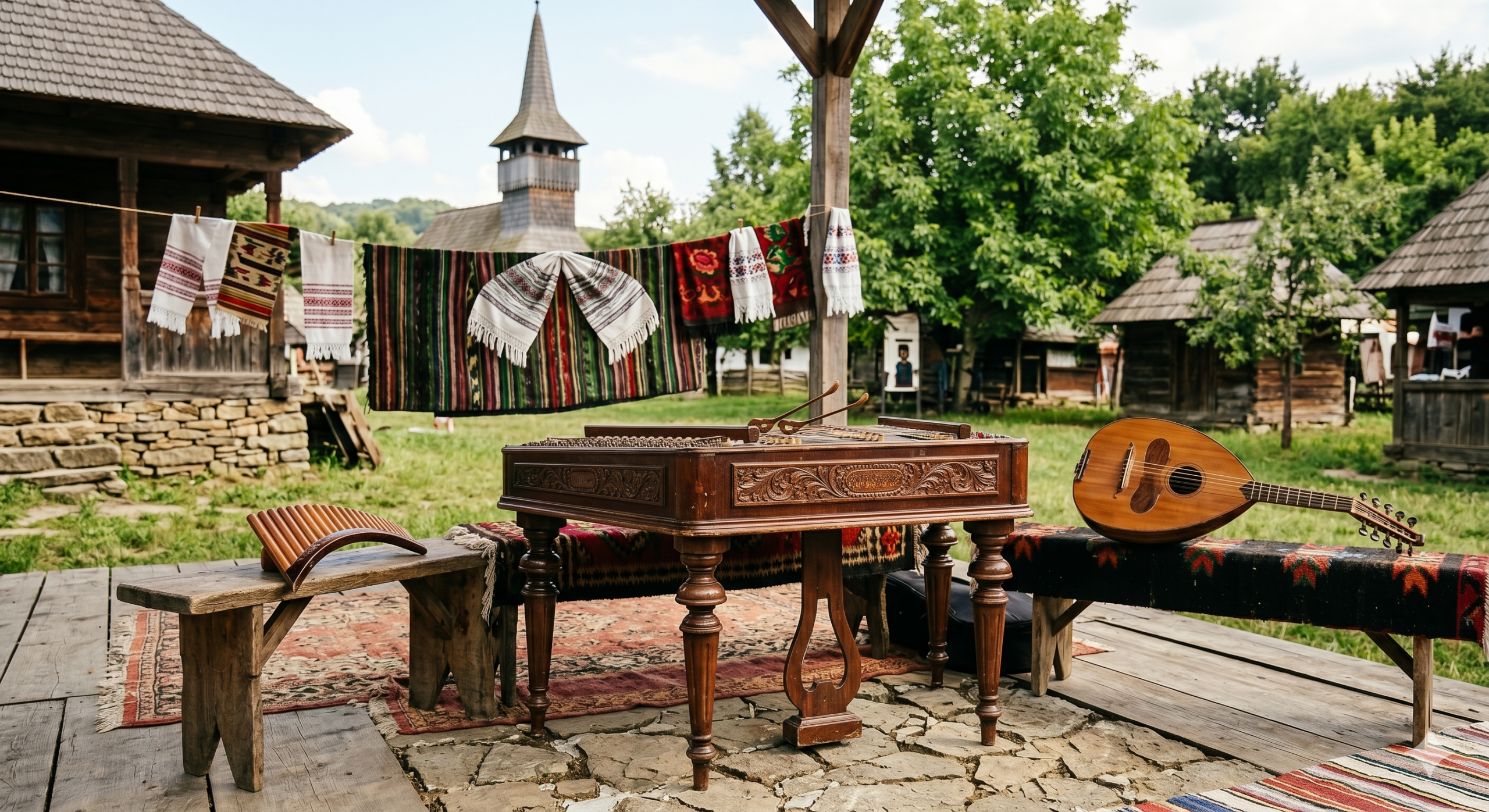
Moldovan traditional music is not only carried through songs and dances, but through instruments that have shaped village celebrations, folk ensembles and regional identity for generations. Some are shared across the wider Balkans and Eastern Europe, while others have a special place in Moldova’s musical culture.
Among the best known are the cobza (KOB-zah), the nai (nye / nigh) and the țambal (tsam-BAHL) – three instruments whose sound still appears in folk performances, festivals and cultural traditions today. Understanding them offers another way to understand Moldova beyond food, wine and landscapes.
What Are Moldova’s Traditional Musical Instruments?
The cobza is considered one of the oldest traditional accompaniment instruments in the Carpathian-Danubian region and holds a special place in Moldovan folk music. A plucked string instrument related to the lute, it has long provided not only harmony, but rhythm and melodic texture in traditional ensembles.
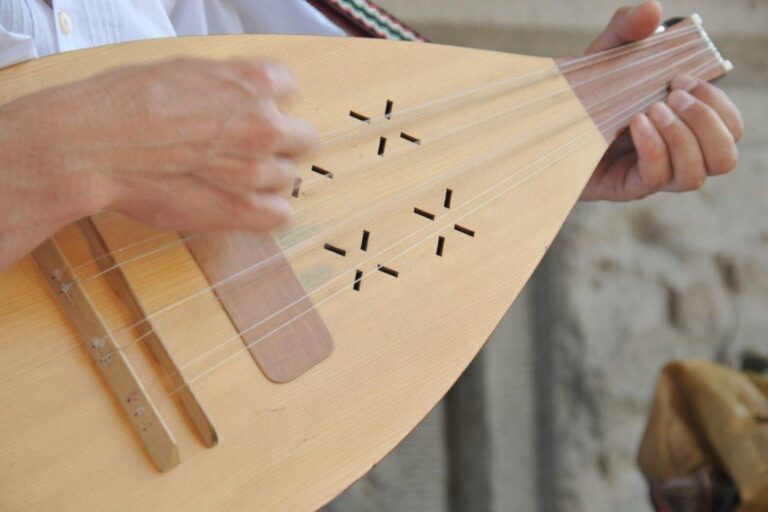
Traditionally built with a rounded pear-shaped wooden body, a short neck and multiple paired strings, the cobza is played with the fingers or a plectrum, historically even a goose feather. Its sound is bright, dry and slightly percussive, making it especially suited to dance music and folk accompaniment.
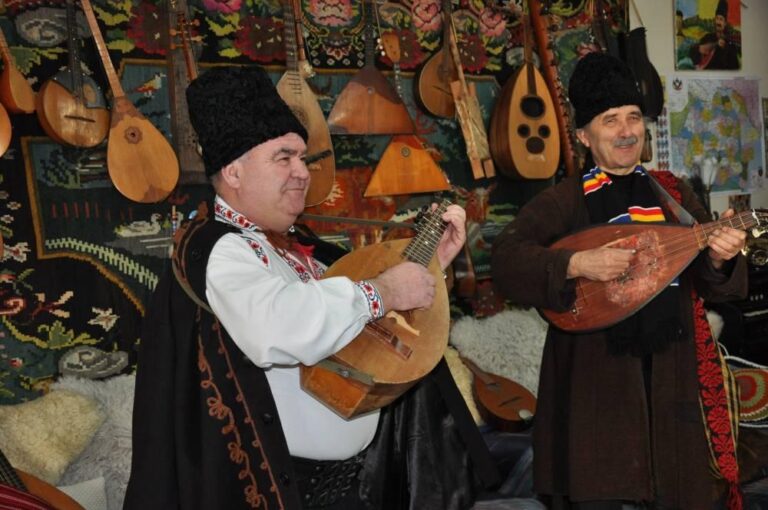
The instrument is closely associated with traditional taraf ensembles — the small folk groups that have shaped much of the region’s rural and Roma musical traditions. In these ensembles, the cobza often provides rhythmic drive and harmonic pulse, giving the music much of its movement.
The cobza also reflects Moldova’s place at a cultural crossroads. It shares similarities with instruments such as the Arabic oud and Persian barbat, suggesting deeper historical influences across the wider region. Found not only in Moldova but also in Romania, Ukraine and Hungary, it is part of a broader musical heritage.
After periods of decline, the cobza has seen renewed interest in recent decades, appreciated again for its distinctive sound and craftsmanship. This revival received international recognition when “Cobza, traditional knowledge, skills and music” was inscribed on UNESCO’s Representative List of the Intangible Cultural Heritage of Humanity in 2025, in a joint nomination by Moldova and Romania. See it here: link.
The Nai (nye)
The nai, often known internationally as the pan flute, is one of the oldest musical instruments in the world and one of the most recognizable sounds in Moldovan folk music. Made from a curved row of reed or wooden pipes of different lengths, the instrument produces its voice through breath alone – a sound that can feel delicate, pastoral or deeply emotional.
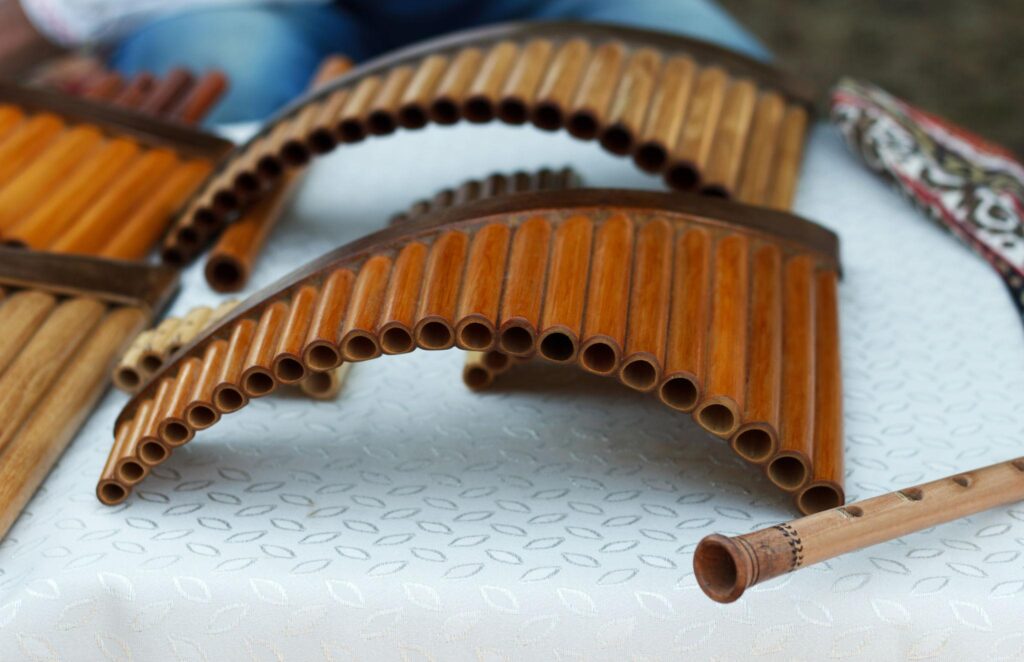
Known in mythology as the Flute of Pan, the nai has ancient roots stretching far beyond Moldova, but in this region it became an enduring part of folk music and rural life. Traditionally, shepherds often made their own simple nai from reeds and played while watching flocks in the fields — a reminder that this was once not only a performance instrument, but part of everyday life.
Traditionally formed from around twenty pipes arranged in a gentle arc, the nai can produce remarkable nuance, from light and playful melodies to haunting, lyrical passages. Few instruments carry such a strong sense of landscape and memory in their sound.
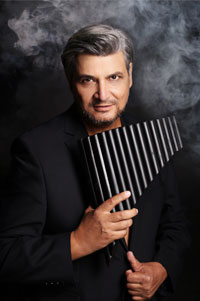
Moldova has also produced celebrated masters of the instrument, including Constantin Moscovici, who has helped keep the nai visible for modern audiences. Many visitors may have already heard his music without realizing it – Moscovici performs the well-known pan flute melody often heard at Chișinău International Airport, a sound that has become quietly associated with arriving in Moldova. Listen to it here: link.
Did You Know?
- The nai is sometimes considered over 6,000 years old.
- Chișinău even has a Monument of the Nai, dedicated to the instrument’s place in Moldovan culture. Address: Dumitru Rîșcanu str 14, Chișinău
- For the first time in history, Moldova participated at the Burning Man Festival in 2025 with an interactive art installation titled Flute from the Future (Naiul Viitorului) – a contemporary reinterpretation of one of the country’s oldest instruments.
The Țambal (tsam-BAHL)
The Țambal is one of the liveliest voices in traditional Moldovan music. A hammered string instrument played with small wooden mallets, it brings rhythm, texture and dazzling ornamentation to folk ensembles, especially in taraf music and festive traditions
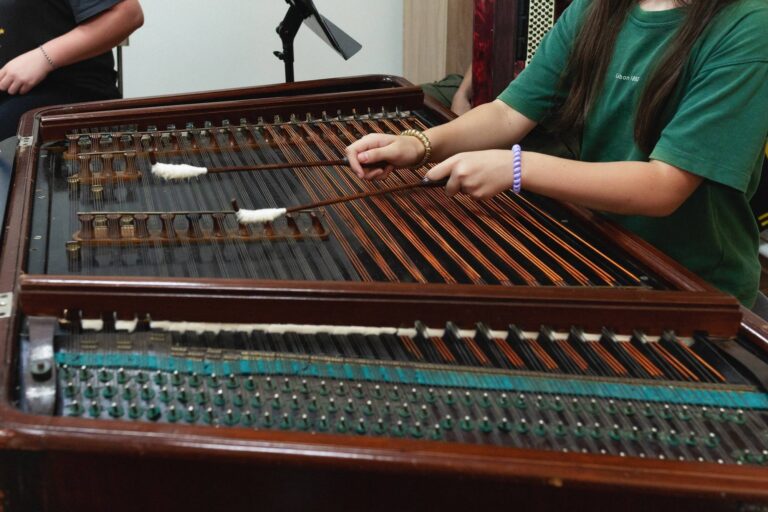
Though deeply associated with Moldovan and Romanian lăutar music, the instrument has older roots linked to Persian and Middle Eastern musical traditions, and relatives of the Țambal can be found across Europe under names such as cimbalom or santur. In Moldova, however, it found a particularly vibrant place in wedding music, dance tunes and village celebrations.
Played by striking strings with light mallets, the Țambal can sound at once rhythmic and melodic – sometimes delicate and shimmering, sometimes fast, driving and exuberant. That versatility made it central in traditional ensembles, where it often adds both momentum and brilliance. Listen to it here: link.
If the cobza gives folk music its pulse and the nai its soul, the Țambal often gives it its sparkle.
Did You Know?
- The earliest known record of the Țambal in Moldovan lands dates back to the 16th century.
- It has long been a defining instrument of taraf and wedding music.
- Variants of the instrument exist across Europe and the Middle East, including the cimbalom and santur.
- The Țambal also appears in classical music, not only folk traditions.

GuideMoldova.com
Keep in touch with our news & offers
Subscribe to Our Newsletter
Thank you for subscribing to the newsletter.
Oops. Something went wrong. Please try again later.