Moldovan food is rarely the reason people decide to visit the country.Most travelers arrive without a clear idea of what to expect, often assuming it will be similar to Romanian or broader Eastern European cuisine. And while that’s partially true, it doesn’t really capture what makes it distinct.What you find here is not a cuisine …
Moldovan Food Explained: What You Should Actually Try
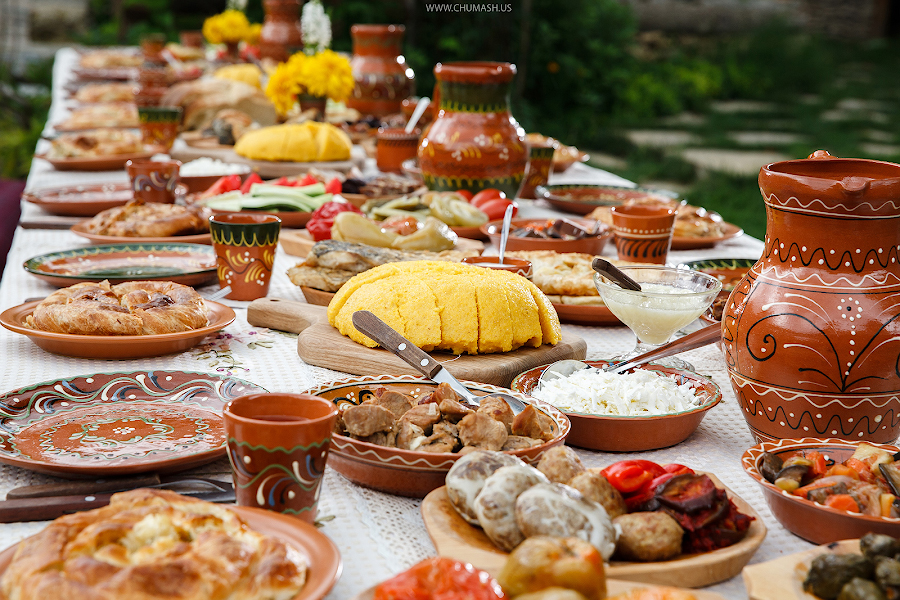
Moldovan food is rarely the reason people decide to visit the country.
Most travelers arrive without a clear idea of what to expect, often assuming it will be similar to Romanian or broader Eastern European cuisine. And while that’s partially true, it doesn’t really capture what makes it distinct.
What you find here is not a cuisine shaped by trends or fine dining culture, but one built around habit, seasonality, and a strong connection to home cooking. It’s food that makes sense locally—based on what grows here, how people eat, and how meals are shared.
For a first-time visitor, the challenge is not access, but understanding. The dishes are simple, the menus are familiar in structure, but the experience only becomes clear once you know what to look for.
That’s why we usually tell visitors: don’t try everything – just try the right things.
What Moldovan food is really about
Moldovan food is not complicated.
At its core, it’s built on seasonal ingredients, simple recipes, and a strong connection to rural traditions, where meals are meant to be shared rather than individually plated or optimized for presentation.
One thing that often surprises visitors is that many traditional recipes don’t follow exact measurements. In many households, especially in rural areas, cooking is done “by eye” – based on experience rather than precise quantities. If you ask for a recipe, you’ll often get answers like “a bit of this,” “enough flour,” or “until it feels right,” which is not particularly helpful unless you already know what you’re doing.
It’s not a cuisine of fine techniques or small portions. It’s generous, practical, and often heavier than what many visitors are used to.
But when it’s done right, it’s very satisfying.
What you should actually try
Mămăligă (the base of everything)
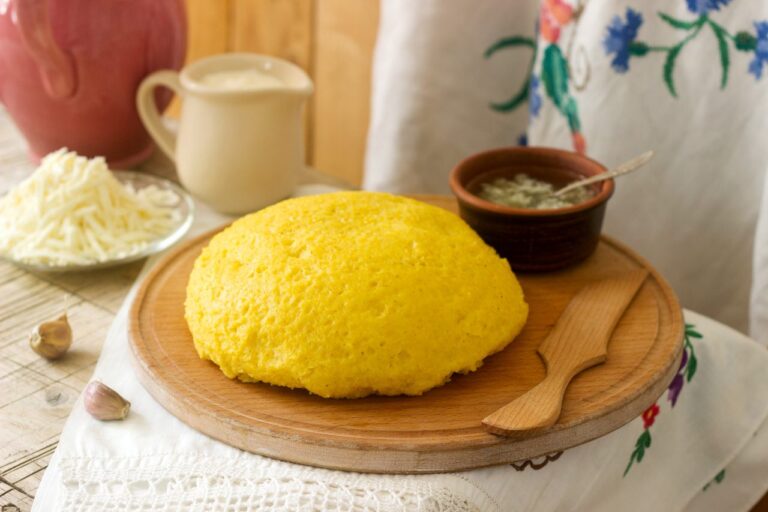
This is probably the most important dish to understand.
Mămăligă is a cornmeal dish, similar to polenta, but usually firmer and served as part of a full meal. You’ll usually get it with cheese, sour cream, and some form of meat or stew, because mămăligă’s main role is not to impress, but to hold everything else together. On its own, it’s… fine. With everything around it, it suddenly makes perfect sense.
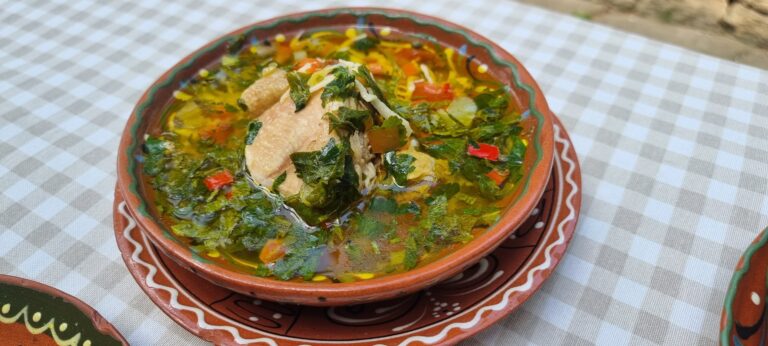
Zeamă (chicken soup, but not really just soup)
Zeamă is one of the most “local” dishes you can try.
It’s a clear chicken soup with vegetables, handmade noodles, and herbs, usually slightly sour. It sounds simple, but it’s very specific in taste and surprisingly comforting.
We often recommend this early in the trip—it gives you a good sense of local flavors.
Plăcinte (savory pies)
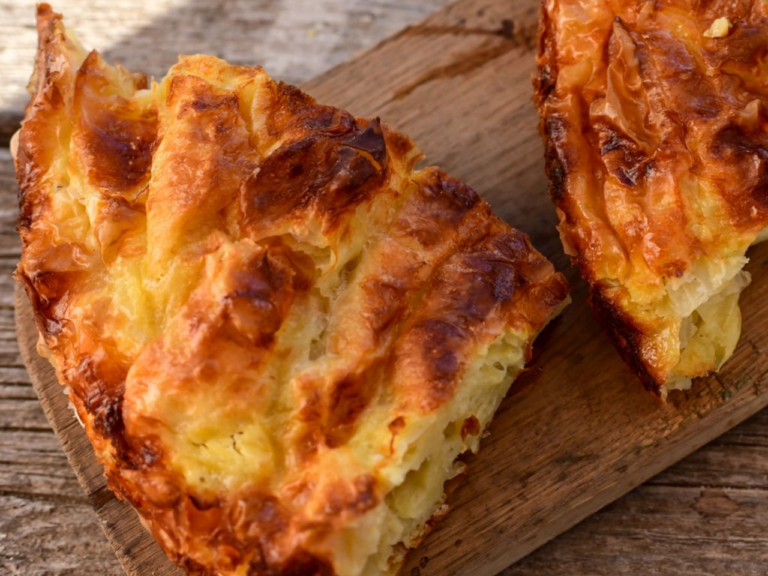
These are one of the easiest and most enjoyable things to try – and probably one of the few things you’ll immediately understand without explanation.
Plăcinte are stuffed flatbreads, usually filled with cheese, potatoes, or cabbage, and sometimes pumpkin, apples or sour cherries if you end up with a sweet version by accident.
You’ll find them everywhere: restaurants, bakeries, roadside stops, and places that don’t look like they specialize in anything but somehow make very good plăcinte.
They’re simple, slightly greasy in the best possible way, and very satisfying – exactly what you want, even if you didn’t plan to eat one.
Sarmale (stuffed cabbage rolls)
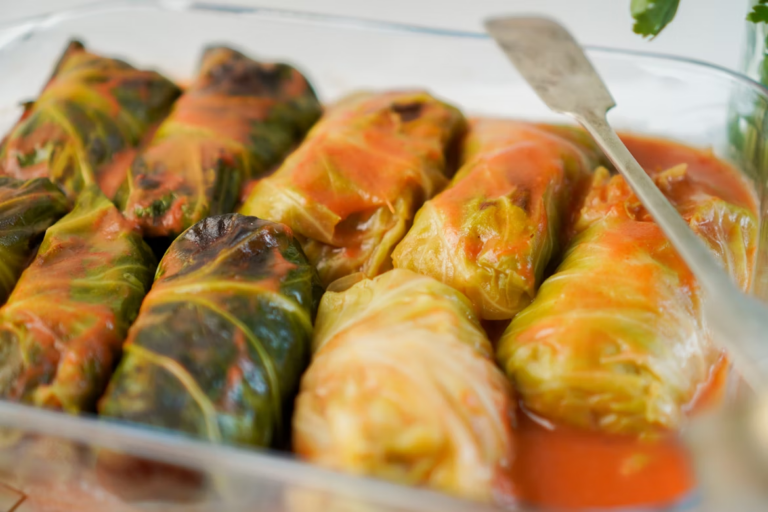
You’ll find sarmale across Eastern Europe, but they’re a staple here.
They are cabbage leaves filled with a mix of rice and meat, slowly cooked and served hot, often with sour cream.
This is one of the most common dishes at family meals, holidays, and traditional restaurants.
Grilled meats & simple dishes
Moldovan cuisine also includes a lot of straightforward grilled or cooked dishes:
- pork
- chicken
- sausages
These are usually served with sides like potatoes, vegetables, or mămăligă. Nothing fancy—but often very well done.

Many people don’t expect how much Moldovan food is about balance and comfort, not presentation. Dishes may look simple, but they’re built around combinations:
- warm + sour + creamy
- soft + rich + fresh herbs
What to expect in restaurants
In Chișinău, you’ll find a mix of traditional restaurants, modern reinterpretations, and casual places serving local dishes.
Not all of them represent the cuisine equally well. Some focus more on atmosphere than on what’s actually on the plate—which is fine, as long as you know what you’re there for.
If you want a proper introduction to Moldovan food, it’s usually better to choose places that prioritize local ingredients and traditional recipes, even if the setting feels simpler. In this case, the less “designed” it looks, the better the chances that the food is taken seriously.
Don’t try to sample everything in one meal. It sounds like a good idea, but it rarely is.
Pick two or three dishes, take your time, and if possible, share. Moldovan food makes more sense when you don’t rush through it—and when you actually have room to enjoy what you ordered.
And if you have the chance, try it outside the city, in a rural setting or at a winery. That’s where it usually feels less like something you ordered, and more like something you were meant to eat there.
Yes – but not because it’s exotic or particularly trendy.
It’s worth trying because it’s honest. It reflects how people actually eat, not how food is adapted for visitors or styled for presentation.
Once you understand a few key dishes, everything else starts to connect – and the experience becomes less about choosing from a menu and more about recognizing what you’re eating.
If you come here, don’t just eat – pay attention to how it’s served, how it’s shared, and how it fits into the experience.
Looking to explore more of Moldova through its food?
Discover our guide to traditional Moldovan dishes, local food experiences, and places in Chișinău worth adding to your itinerary.

GuideMoldova.com
Keep in touch with our news & offers
Subscribe to Our Newsletter
Thank you for subscribing to the newsletter.
Oops. Something went wrong. Please try again later.