When most people plan a trip to Moldova, their minds immediately drift to underground wine cellars, endless fields of sun-drenched vineyards, and centuries-old cave monasteries. Yet, tucked away at the country's absolute northernmost tip lies a destination that completely shatters the typical Moldovan postcard. Far from the standard tourist tracks, the quiet, cliffside village of …
Visit Naslavcea and the Heart-Shaped Island of Moldova
When most people plan a trip to Moldova, their minds immediately drift to underground wine cellars, endless fields of sun-drenched vineyards, and centuries-old cave monasteries. Yet, tucked away at the country’s absolute northernmost tip lies a destination that completely shatters the typical Moldovan postcard. Far from the standard tourist tracks, the quiet, cliffside village of Naslavcea reveals a wild, dramatic side of the country that few international travelers ever get to see.
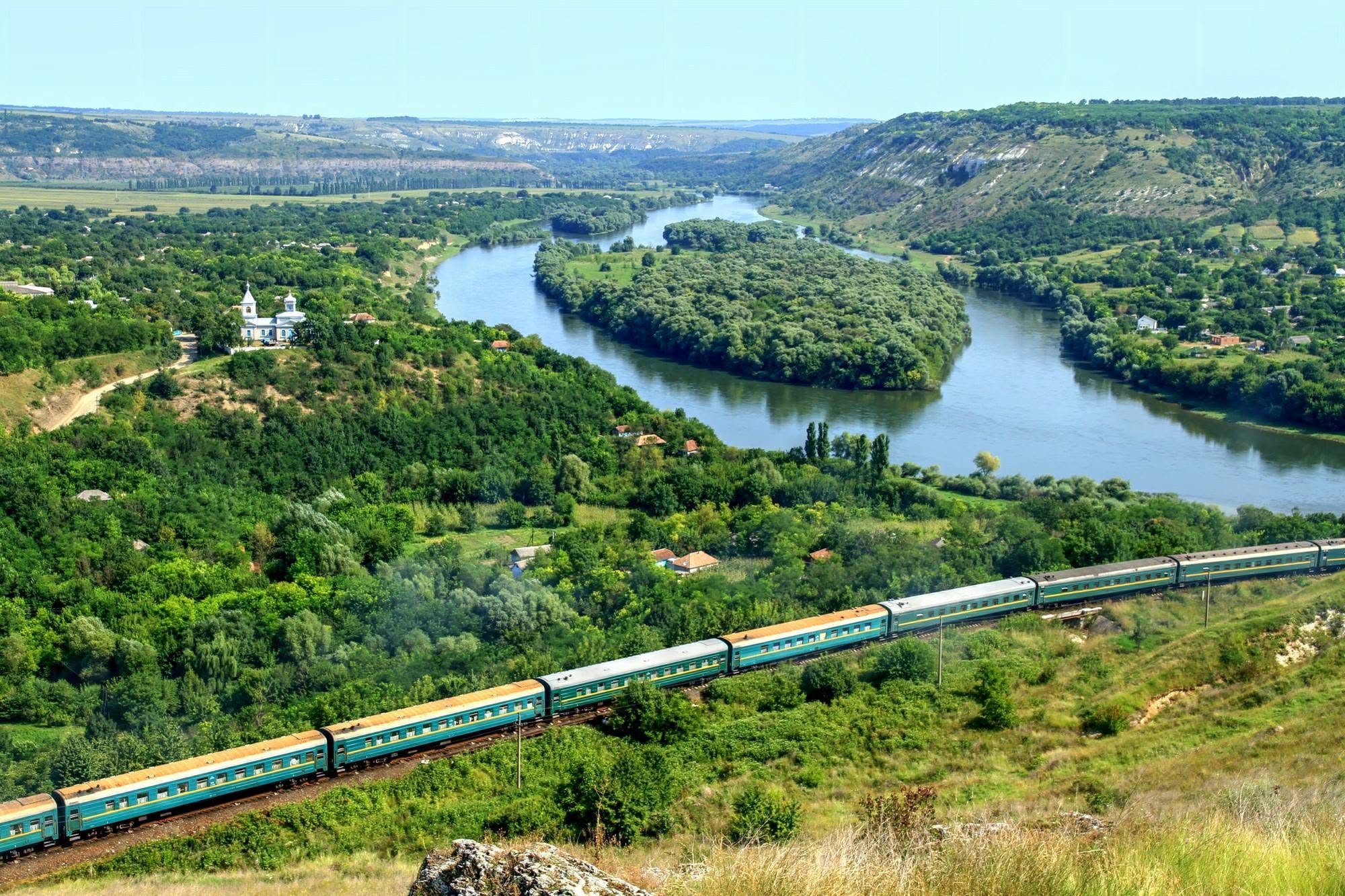
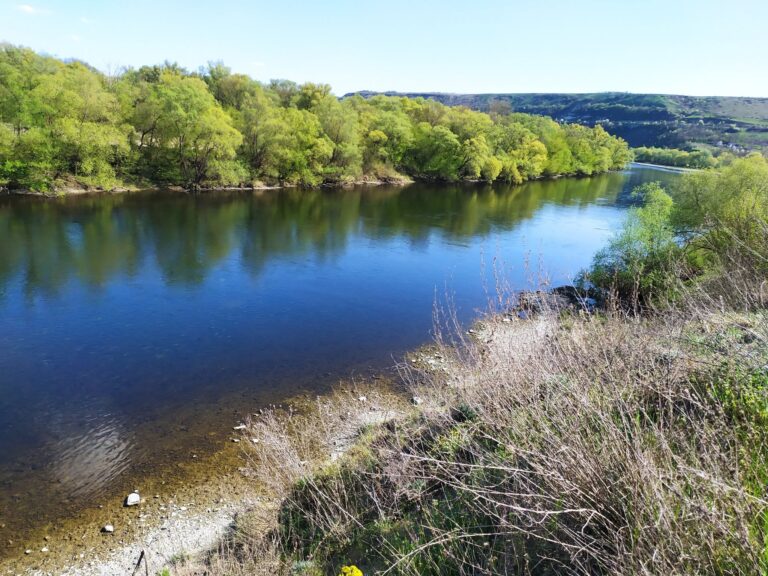
Perched high above the winding waters of the Dniester (Nistru) River, Naslavcea marks the exact border where Moldova meets Ukraine. The village itself is uniquely positioned: while the shallow, rocky waters of the local Chisărău stream cut through the southeastern section of the village, its northern edges drop dramatically straight toward the banks of the Dniester.
The journey there from Chișinău, about 240 kilometers, or a four-hour drive, is an experience in itself. As you head north, the flat plains gradually transform into rolling green ridges and dense woodlands before suddenly opening into a steep, canyon-like landscape. The village is scattered across rocky hillsides and deep ravines, giving it the distinct, unexpected feel of a secluded Carpathian mountain outpost. It is for this exact reason that locals fondly refer to the area as the “Little Moldovan Carpathians.”
The limestone formations overlooking the river valley create a panoramic backdrop that completely resets your perception of Moldovan geography. In the spring, the entire gorge bursts into a striking emerald green, while autumn turns the surrounding forests into a massive canvas of deep gold and amber. If you are willing to wake up early, standing on the high plateaus at dawn offers an unforgettable reward: watching the morning fog silently creep over the water as the sunrise catches the ancient stone face of the cliffs.
The Heart of the River and Prehistoric Secrets
The absolute crown jewel of the area’s landscape is the famous Heart-Shaped Island (known locally as Inima Nistrului or the Heart of the Dniester). Tucked neatly into one of the river’s sharpest, most graceful loops, this small, heavily forested island has naturally formed an almost perfect heart outline. Standing on the high cliffs looking down, the symmetry feels almost too perfect to be natural, a quiet piece of environmental art crafted with zero human intervention.
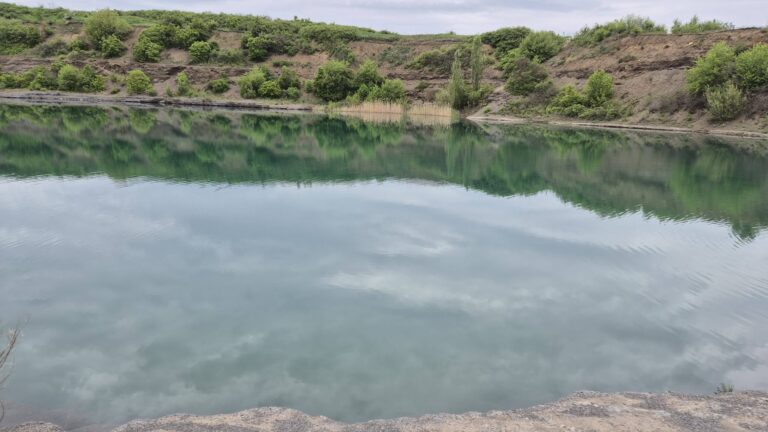
But the island is just the beginning of Naslavcea’s natural wonders. For those who know where to look, the area is a paradise of biodiversity and geology. One of its most famous corners is the “La 33 de vaduri” (The 33 Fords) Landscape Reserve, a striking area packed with crystal-clear natural springs and rare, ancient relict plants.
The ground beneath your feet here carries a fascinating mineralogical richness. Millions of years ago, gigantic tectonic shifts rent the earth in these places, exposing a stunning variety of deep geological strata. As you hike through the ravines, you can spot ancient Tortonian and Sarmatian limestones, smoothly drained flint and silicon in a dazzling array of colors and shades, and deep, dramatic bands of clay shale ranging from pitch black to rich greenish argillite.
This unique soil has made Naslavcea a legendary site for paleontologists. In the protected Carpov Ravine (Carpov Iar), scientists have uncovered fossilized imprints of ancient Sarmatian fish, prehistoric insects, and early primitive human tools. Most remarkably, this is the exact spot where researchers discovered the oldest fossilized grapevine leaf ever identified on the territory of Moldova, a poetic reminder that the country’s wine heritage stretches back into deep, geological time.
A Centuries-Old Tapestry of Faith and Survival
Human history has left a deep, quiet mark on these cliffs. Naslavcea was first mentioned in historical documents in the first half of the 15th century, during the reign of Stephen the Great (Ștefan cel Mare), who included the settlement in a royal decree securing lands for the boyars of the time. In those medieval days, the village was widely famous across the region for its powerful watermills along the river. Archaeological digs, like the landmark 1958 expedition, have pushed the story back even further, uncovering a major 8th-to-9th-century settlement in an area the locals still call “La Cruci” (At the Crosses).
Standing proudly on a hill in the very center of the village is the Church of the Assumption of the Virgin Mary (Biserica Adormirii Maicii Domnului), which has been continuously active since its doors opened in 1905. The church has weathered the storms of modern history; during the dark years of the First World War, its historic bronze bells were stripped, melted down, and repurposed to manufacture weapons.
Just two kilometers from the church, hidden in the rocky bluffs, lie the historic Nagoreni Caves. Centuries ago, these deep stone recesses served as a vital sanctuary where local villagers hid from invading Tatar raiders. Decades later, during the Soviet period, the caves acquired a touch of artistic mystery when an unknown artist meticulously carved a detailed portrait of the famous Ukrainian poet Taras Shevchenko directly into the live stone wall.
The connection to Ukraine is palpable here. If you look down into the low valley just across the river, you can spot the Ukrainian village of Liadova, home to one of the oldest cave monasteries in Eastern Europe. Founded in 1013 by Saint Anthony of Pechersk, the very same monk who established the legendary Kiev Pechersk Lavra, the Lyadovsky Rock Monastery celebrated its millennium anniversary in 2013 and remains a breathtaking sight etched directly into the opposing river cliffs.
Turning the Journey North
Given its distance from the capital, the best way to experience Naslavcea is to pack a pair of sturdy hiking shoes, leave the strict schedules behind, and turn it into a slow, deliberate northern road trip. You can spend your days hiking the “33 Fords,” buying fresh honey and produce from local villagers, and fishing in the quiet waters of the reservoir formed by the Novodnestrovsk dam.
To build a full itinerary, you can easily combine the quiet cliffs of Naslavcea with a stop at the imposing medieval Soroca Fortress, a quiet afternoon at the cliffside Japca Convent, or a trek through the spectacular Rudi-Arionești Nature Reserve.
If you’re looking to see a completely different face of Moldova—one defined by complete silence, deep prehistoric history, and dramatic natural viewpoints—Naslavcea and its heart-shaped island deserve a spot right at the very top of your itinerary.
See you in the north! 🇲🇩

GuideMoldova.com
Keep in touch with our news & offers
Subscribe to Our Newsletter
Thank you for subscribing to the newsletter.
Oops. Something went wrong. Please try again later.