For someone encountering it for the first time, Paștele Blajinilor can be difficult to interpret.Cemeteries fill with people. Families arrive carrying food, wine, flowers. Tables appear between graves. Conversations stretch for hours.At a distance, it can look almost like a gathering that doesn’t quite match the setting.But the logic of the day becomes clearer once …
Paștele Blajinilor: A Day of Remembrance That Feels Surprisingly Alive
For someone encountering it for the first time, Paștele Blajinilor can be difficult to interpret.
Cemeteries fill with people. Families arrive carrying food, wine, flowers. Tables appear between graves. Conversations stretch for hours.
At a distance, it can look almost like a gathering that doesn’t quite match the setting.
But the logic of the day becomes clearer once you stay a little longer.
What Is Paștele Blajinilor?
Paștele Blajinilor — often translated as the “Easter of the Dead” — takes place shortly after Orthodox Easter, usually on a Sunday or Monday, depending on local custom.
It is one of the most important days of remembrance in Moldova, but it does not follow the tone many visitors might expect.
This is not a day defined by silence.
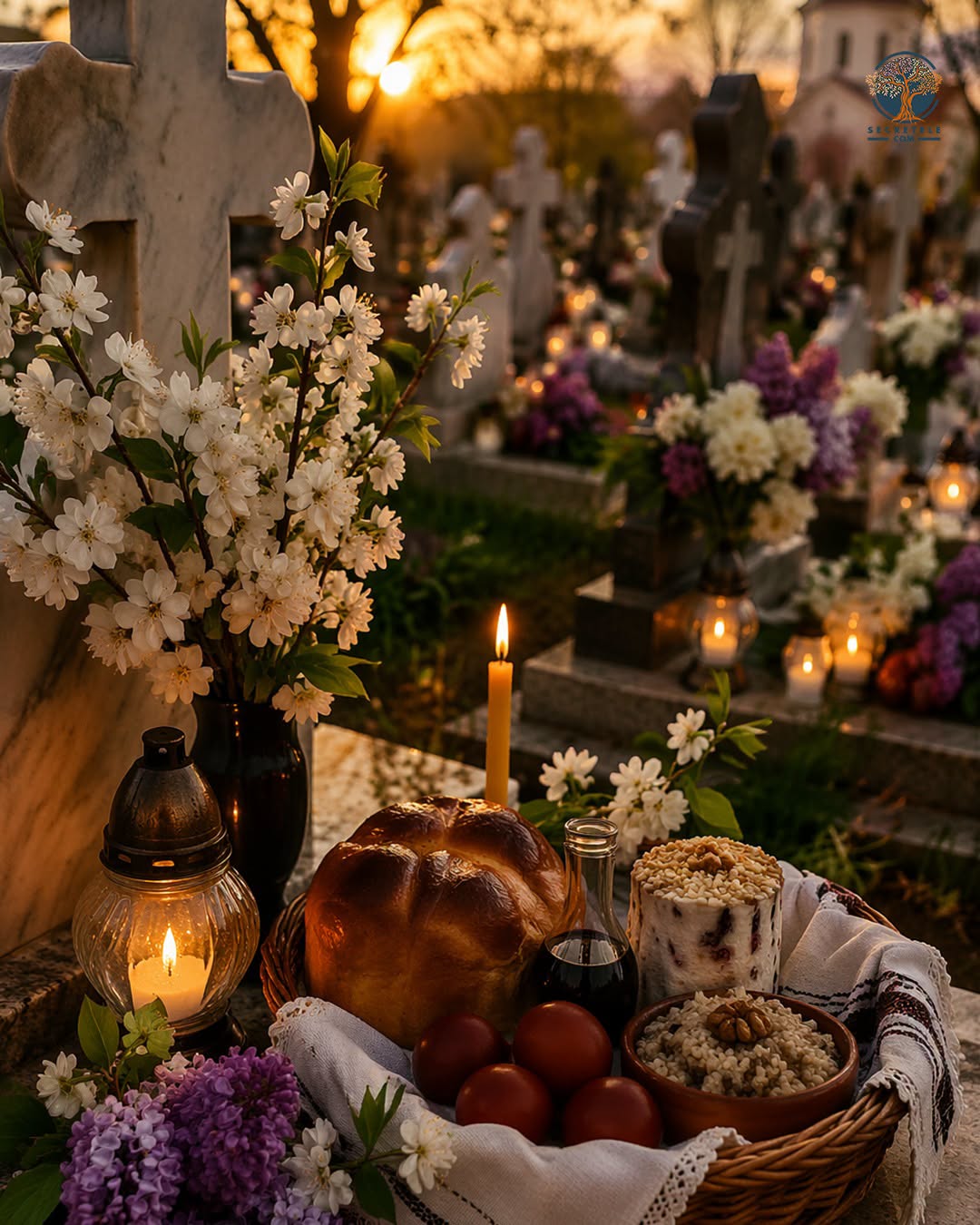
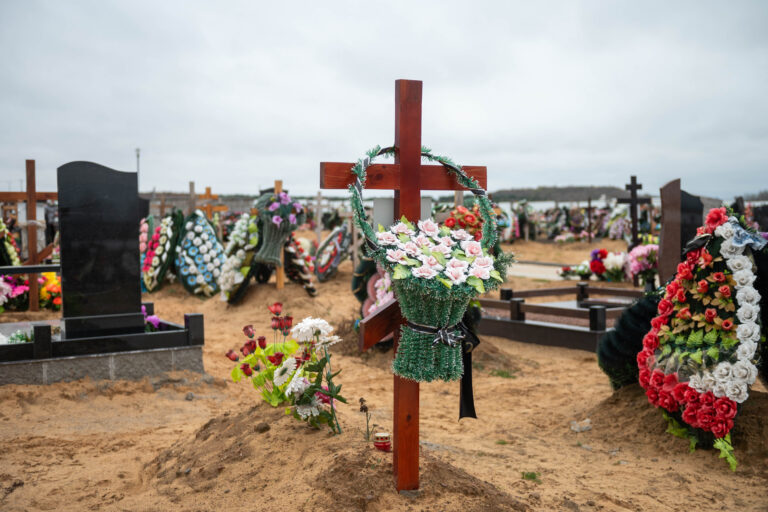
Across the country, cemeteries become places of return. Families clean and prepare graves, bring food, light candles, and wait as priests move from one site to another, offering blessings.
What follows is less a ritual in the strict sense and more a continuation of presence.
People sit, eat, talk.
Why Food Matters
Food is central to the day, not as a symbolic offering left behind, but as something shared.
Plates are passed between relatives, neighbors, sometimes even strangers standing nearby.
The act itself carries meaning: memory is not kept privately, but maintained through exchange.
The Atmosphere Feels Different
What surprises many visitors is the atmosphere.
It is not somber in the way Western traditions of remembrance often are. It is calm, social, sometimes quietly warm.
Conversations move between past and present — stories about those who are gone, updates about those who are still here.
Families that may not see each other often use the day to reconnect.
In this context, the cemetery does not feel like a space separate from life.
It becomes part of it.
What It Reveals About Moldova
This is also why Paștele Blajinilor says something essential about Moldova.
It reflects a culture in which family continuity is taken seriously, and where the past is not treated as distant.
Memory is visible, shared, and integrated into everyday life rather than confined to private moments.
How Visitors Should Approach It
For visitors, this requires a different kind of attention.
If you happen to be in Moldova during this period, you will notice the change immediately. Cemeteries are crowded, transport can be busier, and the rhythm of the city shifts slightly.
It is possible to visit, but it is not something designed to be observed as a spectacle.
The best approach is simple: be present, but discreet.
Watch before you act. Avoid intrusive photography. Understand that what you are seeing is not a cultural performance, but a personal moment repeated across thousands of families.
More Than a Tradition
Paștele Blajinilor is not a “must-see attraction” in the conventional sense.
But it offers something that few curated experiences can: a direct view into how a society relates to memory, family, and time.
And perhaps more importantly, it challenges an assumption.
In Moldova, remembrance is not separated from life.
On this day, the two exist side by side — quietly, naturally, without contradiction.

GuideMoldova.com
Keep in touch with our news & offers
Subscribe to Our Newsletter
Thank you for subscribing to the newsletter.
Oops. Something went wrong. Please try again later.