At first glance, the traditional blouse known as the ie appears almost identical on both sides of the Prut River.The cut is familiar, the embroidery follows a shared visual language, and the symbolism — geometric repetition, symmetry, and balance — belongs to a common cultural space. For many visitors, the conclusion comes quickly: it is …
The Ie in Moldova: What Makes It Different from the Romanian Variant
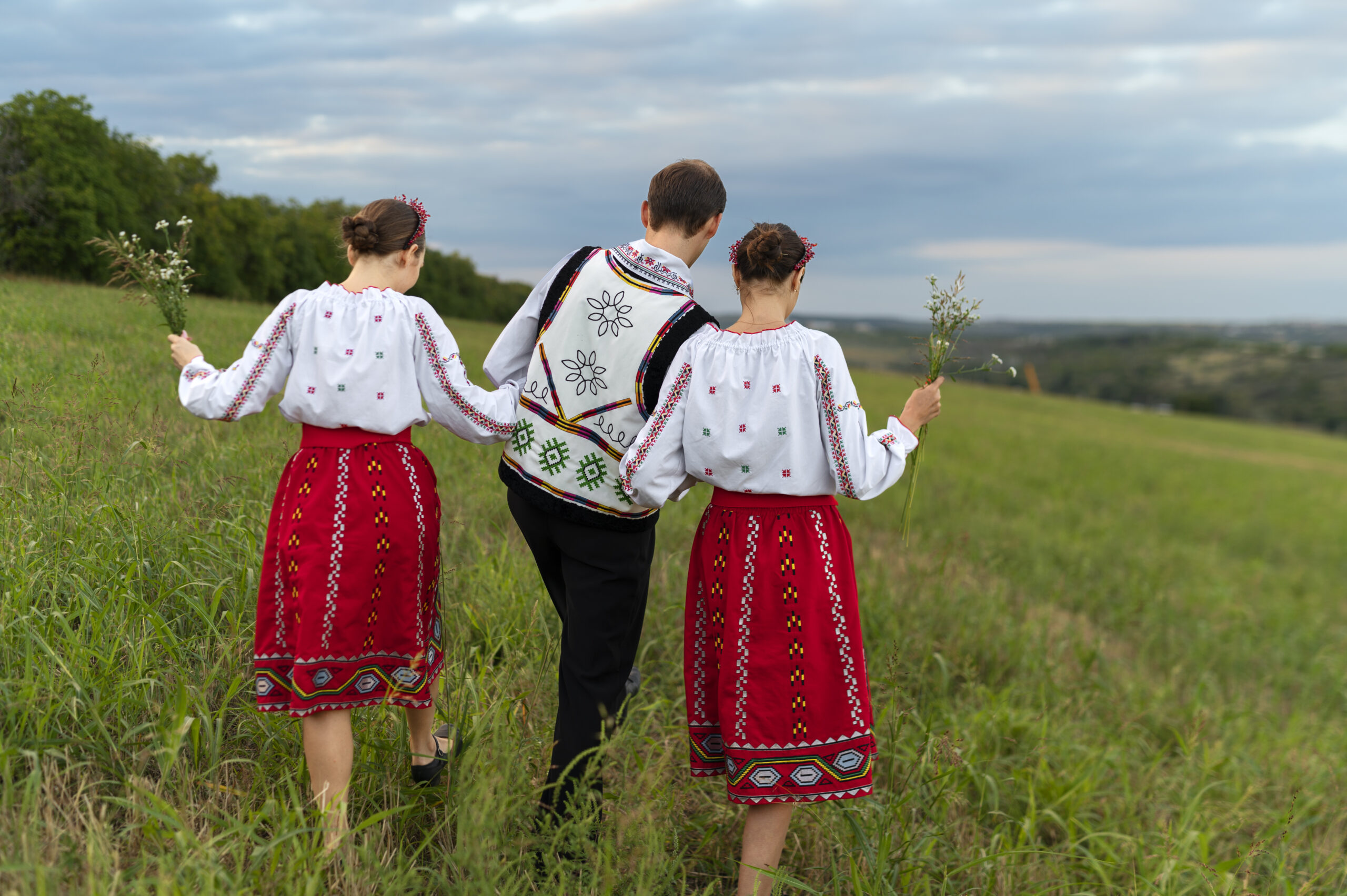
At first glance, the traditional blouse known as the ie appears almost identical on both sides of the Prut River.
The cut is familiar, the embroidery follows a shared visual language, and the symbolism — geometric repetition, symmetry, and balance — belongs to a common cultural space. For many visitors, the conclusion comes quickly: it is the same garment.
But that impression begins to change with time.
The differences are subtle, and they are rarely explained directly. You do not notice them immediately in a souvenir shop or a quick photograph. They become visible gradually — in the density of the embroidery, the choice of colors, the proportions of the blouse, and the way it is worn.
More Than Traditional Clothing
The ie, both in Moldova and Romania, has historically been more than decorative clothing.
Traditionally made from linen or cotton, it was shaped by local materials, climate, and everyday life. The embroidery followed carefully organized compositions across the sleeves, shoulders, and chest, often carrying regional meanings and visual patterns passed through generations.
What changed over time was not the concept of the ie itself, but the way each region expressed it.
A More Restrained Aesthetic
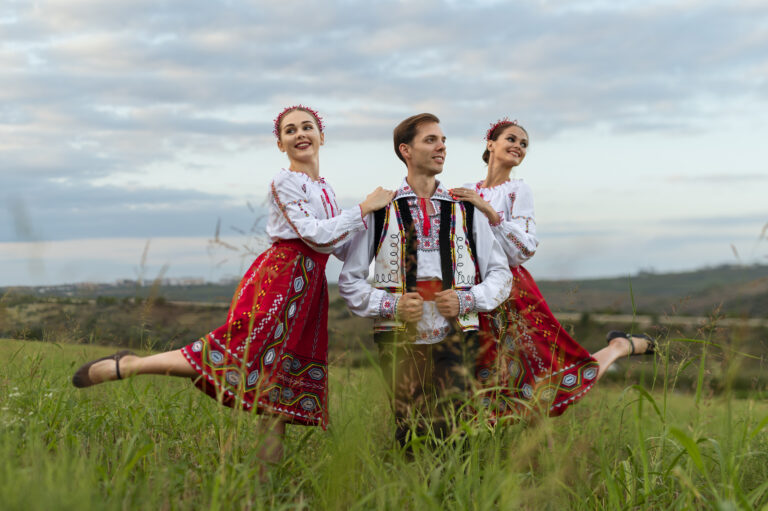
In Moldova, the ie often feels more restrained in appearance.
The embroidery is frequently lighter and less crowded, allowing more space between patterns. The compositions tend to feel disciplined and balanced rather than visually dense.
There is a sense of rhythm and structure that prioritizes coherence over decoration.
Color works in a similar way.
Many Moldovan blouses rely on darker tones — black, deep red, burgundy, brown — often combined within a narrower palette. The contrast between fabric and embroidery is clear, but rarely excessive.
Compared to some Romanian variants, which can be more elaborate or chromatically intense, the Moldovan approach often appears quieter and more controlled.
A Garment Still Connected to Everyday Life
Part of this difference comes from how the ie evolved historically in Moldova.
For longer periods, the blouse remained closer to its practical role within everyday rural life and was less transformed into a ceremonial or highly stylized object.
That continuity still shapes its visual identity today.
Even modern reproductions often preserve a sense of functionality and simplicity rather than turning entirely toward ornament or performance.
Where the Differences Become Visible
Understanding these distinctions requires context.
The clearest examples are rarely found in highly commercial settings. They are easier to notice in villages, local markets, traditional celebrations, or institutions such as National Museum of Ethnography and Natural History, where regional garments are preserved with more attention to detail.
In urban environments, the boundaries become less precise.
Many modern blouses are reinterpretations influenced by fashion trends or by a generalized image of “traditional Eastern European clothing,” which naturally softens regional distinctions.
A Difference of Nuance, Not Identity
This is why the Moldovan ie is easy to misunderstand at first.
The difference is not one of concept, but of nuance.
Over time, however, those nuances become meaningful. The garment stops feeling like a single shared symbol and begins to reflect local habits, aesthetics, and historical continuity.
What initially appears identical gradually reveals a distinct identity — quieter, more restrained, and deeply connected to the everyday cultural fabric of Moldova.

GuideMoldova.com
Keep in touch with our news & offers
Subscribe to Our Newsletter
Thank you for subscribing to the newsletter.
Oops. Something went wrong. Please try again later.